
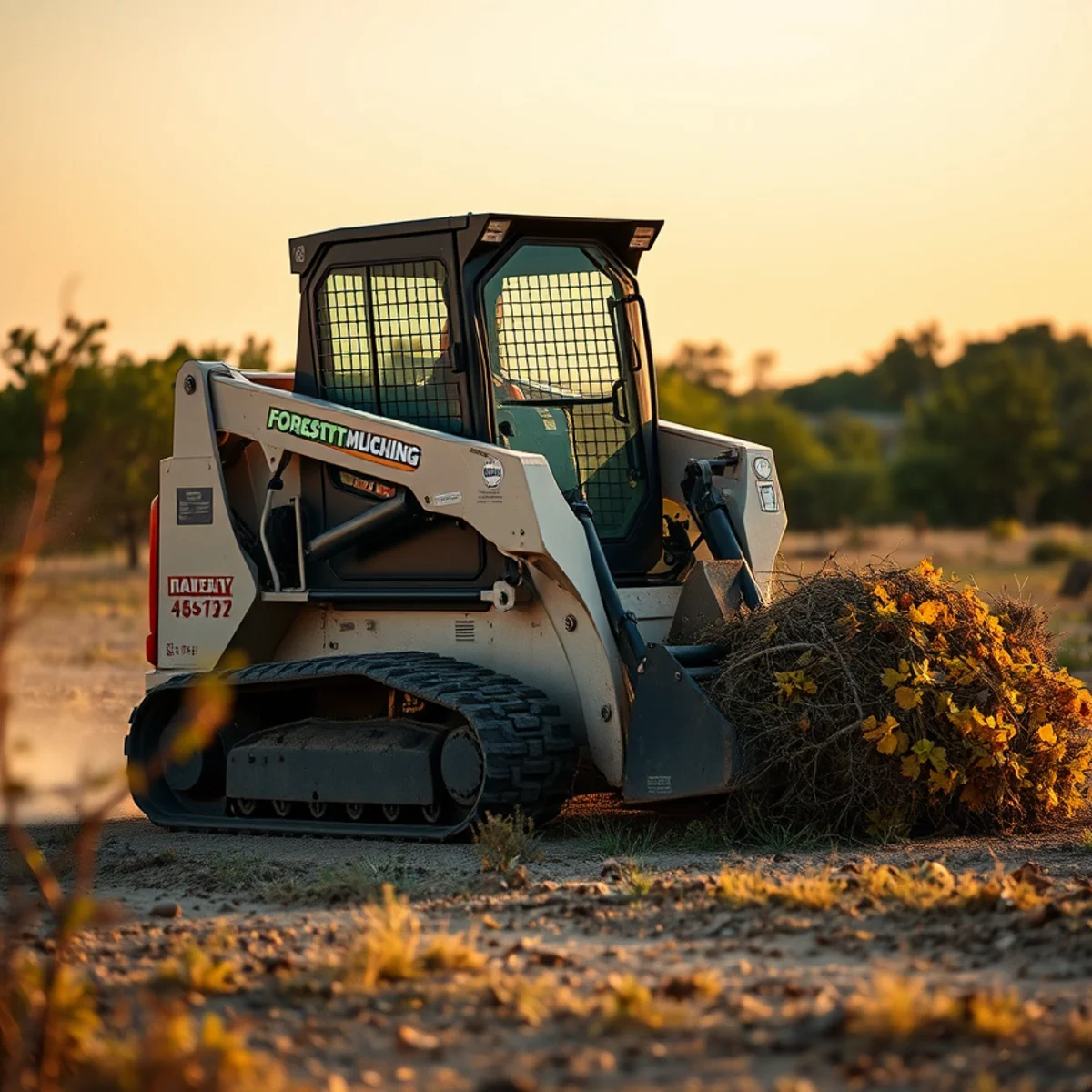
Land Clearing in Fort Worth, TX
Land clearing in Fort Worth, TX takes more than a chainsaw and a good attitude. Whether you're prepping a building site, opening up overgrown pasture, or carving a defensible firebreak around a rural home, Sion Tree Service clears the trees, brush, stumps, and tangled understory so you're left with clean, usable ground. We work residential lots and rural acreage across Tarrant, Parker, and Johnson counties, and we haul every bit of debris away so the site looks like we were never there.
Land clearing in Fort Worth, TX takes more than a chainsaw and a good attitude. Whether you're prepping a building site, opening up overgrown pasture, or carving a defensible firebreak around a rural home, Sion Tree Service clears the trees, brush, stumps, and tangled understory so you're left with clean, usable ground. We work residential lots and rural acreage across Tarrant, Parker, and Johnson counties, and we haul every bit of debris away so the site looks like we were never there.
Around North Texas, a clearing job is rarely just trees. You're dealing with thickets of hackberry and Ashe juniper ("cedar"), volunteer mesquite, briars, and root systems set deep in expansive clay soil. Our crew brings trained climbers, well-maintained equipment, and a plan for the whole site, not just the obvious timber. The result is honest, quoted-equals-final pricing and a finished lot you can actually build on, fence, or graze.
What's Included
- On-site walkthrough and a written scope before any equipment rolls in
- Selective or full removal of trees, saplings, and standing timber
- Brush, briar, and understory clearing including cedar and mesquite thickets
- Grubbing and removal of surface roots and root balls where access allows
- Stump grinding or stump removal on the trees we take down
- On-site chipping, grinding, or hauling of all woody debris
- Defensible-space and firebreak clearing for rural and wildland-edge lots
- Final clean-up with debris hauled away and the site left tidy
- Utility line and underground locate coordination (811 call-before-you-dig) before any grubbing or grading begins
- Forestry mulching as an option, leaving a stabilizing mulch mat on-site instead of hauling every load off
- Silt fence and basic erosion-control measures on cleared slopes draining toward roads, ditches, or neighbors
- Selective canopy retention, flagging keeper trees like live oak, bur oak, or pecan to leave shade and meet tree-cover rules
- Cut-and-grade-ready finish, knocking down windrows and surface ruts so a dozer or box blade can follow our crew
When to Call for Land Clearing
- You bought a wooded or overgrown lot and need it cleared for a new home, shop, or driveway
- Pasture or hay ground has been overrun with cedar, mesquite, and brush
- You want a defensible firebreak cleared around a rural home, barn, or outbuilding
- Dense understory and deadfall are crowding out healthy trees or blocking access
- You need fence lines, trails, or building pads opened up on rural acreage
- A bank, builder, or septic installer needs the lot cleared and a clean pad staked before they will set a closing or pour date
- Post-storm derecho or ice damage left a tangle of downed cedar elm, hackberry, and broken limbs across acreage
- You are subdividing or fencing a tract and need property lines, easements, and corners walked and cleared
- An insurance carrier or county fire marshal flagged overgrown brush against the house as a defensible-space problem
Why Land Clearing Pays Off
Build-ready lots
We clear trees, brush, and surface roots so your homesite, shop pad, or driveway has a clean, open footprint your builder can stake and grade without surprises.
Reclaimed pasture
Overgrown rural acreage gets opened back up by removing cedar, mesquite, and brush, restoring usable grazing and hay ground across Parker and Johnson county.
Real fire safety
For rural and wildland-edge properties, we thin and clear flammable brush and junipers to create defensible space and firebreaks around homes, barns, and outbuildings.
Complete haul-away
Every job ends with thorough clean-up and debris removal. We grind, chip, or haul the material off so you're not left staring at burn piles for months.
Honest, fixed pricing
You get a clear written estimate after we walk the site. The number we quote is the number you pay, with no mid-job add-ons or vague "it got complicated" charges.
Local owner-operator
Edgar and our DFW crew handle the work directly. You're hiring a licensed, insured, locally owned company, not a national chain that subcontracts the job out.
How Our Land Clearing Works
Free on-site estimate
We walk the property with you, look at access, terrain, tree density, and what stays versus goes, then hand you a clear written quote. Estimates are always free.
Plan and schedule
We map out staging, equipment, and how debris leaves the site, and confirm a start date that works for your build or grazing timeline, often within days.
Clear and grub
Our crew drops and removes trees, clears brush and understory, grinds or pulls stumps, and grubs surface roots so the ground is genuinely workable.
Haul-away and final clean-up
We chip, grind, or load out every bit of debris and do a final pass so the lot is clean and ready for the next step. No piles left behind.
What Drives Your Land Clearing Cost in Fort Worth
Land clearing is priced by the acre and by the job, and the biggest factors are how densely the lot is wooded, the size and species of trees, terrain and access for equipment, how much stump grubbing you want, and whether debris is chipped on-site or hauled off. A thin, brushy pasture clears very differently from a stand of mature oaks on a clay slope, so a flat per-acre figure rarely tells the real story. That's why we walk every property and give you a free, written estimate with honest, quoted-equals-final pricing.
Vegetation density and tree size
An acre of light brush and volunteer mesquite clears for a fraction of what a dense stand of mature post oak or cedar elm costs, because big trunks, deep roots, and heavy debris all add machine hours.
Clearing method
Forestry mulching in place is generally cheaper than full removal because there is no loading and hauling, while complete haul-off to a clean pad costs more but is what most building sites require.
Stump grubbing and root removal
Leaving stumps is cheapest, grinding them adds cost, and fully grubbing out root balls for a building pad or pasture is the most labor-intensive option per acre.
Access and terrain
Tight gates, soft clay, slopes, ponds, and long hauls from the work area to the road all slow equipment and raise the per-acre number, especially on rural Parker and Johnson county tracts.
Debris disposal and haul distance
Chipping or mulching on-site is the most economical, while loading and trucking material to a disposal site adds dump fees and trips that scale with how far you are from town.
Erosion control and permitting
Silt fence, mulch matting, and any required stormwater or tree-removal compliance add cost on regulated or sloped sites, and larger acreage is more likely to trigger them.
The local details most companies skip — what every Fort Worth homeowner should understand about land clearing before the work begins.
Forestry Mulching vs. Haul-Off: Choosing the Right Land Clearing Method in DFW
The single biggest decision on a North Texas clearing job is what happens to the wood and brush, and it drives both your cost and your finished ground. There is no one right answer, only the right method for what you are doing with the land. We walk your tract and match the approach to the goal rather than selling you the most expensive option.
When forestry mulching makes sense
A track-mounted mulcher grinds cedar, mesquite, briar, and small-to-mid trees into a mulch mat that stays on the ground. That mat shades the soil, slows runoff on our clay, and breaks down into organic matter, which is ideal for reclaiming overgrown pasture, opening trails and fence lines, and cutting fire breaks. It is usually the faster and more economical route because nothing gets loaded or trucked away.
When full haul-off is the better call
If you are setting a house pad, a shop slab, a driveway, or a septic field, you want bare, workable ground with no mulch layer or buried wood to interfere with grading and compaction. In that case we drop, grub, and load the material out, then leave a clean lot your builder can stake and a dozer can grade. Many jobs are a hybrid, mulching the back of a tract while hauling the building footprint clean.
- Mulch-in-place: best for pasture, grazing, fire breaks, and trails where a mulch mat helps
- Full haul-off: best for homesites, slabs, driveways, and septic areas needing bare grade
- Hybrid: mulch the perimeter and acreage, haul the pad and access lanes clean
- Species matters: stringy cedar and mesquite mulch well, large hardwood trunks are often hauled
Permits, Stormwater, and Erosion Control for Clearing North Texas Clay
Clearing dirt in Tarrant, Parker, and Johnson counties is not just a chainsaw job, it sits inside a web of stormwater and tree rules that change with how much ground you disturb and whether you are inside city limits. We are not your permit office and we do not invent fees, but we will tell you when your project size likely puts you on the regulators' radar so you can confirm before a single tree drops.
Know your acreage thresholds
- Disturb one acre or more and you generally fall under TCEQ construction stormwater rules requiring a stormwater pollution prevention plan
- Disturb five acres or more and a Notice of Intent is typically filed before soil is moved
- Inside Fort Worth, an urban forestry or tree-removal review may apply separately from stormwater rules
- Floodplain, creek, and drainage easements on your parcel can add their own restrictions
Why erosion control matters on clay
Expansive North Texas clay sheds water fast, and a spring thunderstorm on freshly stripped ground sends silt straight into roadside ditches, ponds, and neighboring lots. We protect cleared slopes with silt fence and leave a mulch mat where it earns its keep, and we avoid scalping any ground you are not about to build on. That keeps your topsoil on your land and keeps you out of a drainage dispute with the property next door.
How to Vet a Land Clearing Contractor in Fort Worth Before You Sign
Land clearing draws plenty of guys with a borrowed skid steer and no insurance, and the homeowner is the one left holding the bag when a line gets cut or a stump pile sits for six months. Before you hand anyone the keys to your acreage, run through a short checklist that separates a real crew from a weekend operation.
- Ask for proof of liability and equipment coverage, and confirm it is current, not a lapsed certificate
- Get the scope in writing, exactly which trees go, which stay, how deep stumps are ground, and where debris ends up
- Confirm an 811 locate will be called so buried gas, electric, water, and fiber are marked first
- Ask how they handle erosion on slopes and who is responsible if silt washes onto a neighbor
- Make sure the quote is the final number, not a per-hour rate that balloons when the clay turns out to be hard
At Sion Tree Service, Edgar and the DFW crew handle the work directly as a licensed and insured, locally owned company, with quoted-equals-final pricing and full clean-up. We would rather lose a bid to a careful comparison than have you hire the cheapest truck in the lot and pay for it later.
Smart Homeowner Tips Before You Hire Anyone
A few habits that protect your wallet, your property, and your insurance claim — whether you hire us or not.
Get the debris plan in writing, mulched-in-place versus hauled-off changes both the price and what your lot looks like the day we finish.
Always confirm whether your acreage trips the one-acre or five-acre stormwater threshold before soil moves, because a stop-work order costs far more than the plan would have.
Ask any clearing contractor for proof of liability and equipment coverage, hauling timber and running a track mulcher is high-risk work you do not want uninsured on your property.
Flag the trees you want to keep with ribbon before the crew arrives, mature live oak and pecan are worth saving and impossible to put back.
Schedule clearing for a dry stretch when you can, working saturated clay leaves deep ruts that you will pay to regrade later.
On rural lots, point out wells, septic fields, and private propane or water lines, 811 only marks public utilities and a track machine will not feel a buried lateral.
Land Clearing Across Fort Worth & DFW
Serving Fort Worth and the surrounding Dallas–Fort Worth metroplex, seven days a week.
Fort Worth neighborhoods we work in often:
Trusted by Local Homeowners
“Sion Tree Service did an outstanding job trimming the trees at my home. The crew of 6 came in and quickly removed all the dead limbs and trees that needed to come out. Their cleanup was amazing! Highly recommend them!”
“Very fast work, arrived right on time, workers very professional and cleaned up before leaving. The price was what was quoted. I'd recommend them to anyone needing tree trimming. I'll be using them again!”
“Great communication and super responsive. Squeezed me in the next day and did an awesome job removing and grinding a large tree that had fallen in a storm. Have used them twice with great service both times.”
Land Clearing FAQs
It varies a lot with tree density, tree size and species, terrain, access, and how much grubbing and haul-away you need. A lightly brushed acre is far cheaper to clear than a heavily wooded one with mature stumps. We give you a free written estimate after walking the site so the price reflects your actual lot, not a guess.
Yes. We clear residential building lots in and around Fort Worth as well as multi-acre rural tracts across Tarrant, Parker, and Johnson counties. We scope each job to the property, whether it's a single shaded backyard or pasture that's been swallowed by cedar.
We haul it. Depending on the job we chip, grind, or load and remove the woody debris, and we finish with a clean-up pass so you're not left with burn piles or windrows. Full haul-away is part of how we leave a site looking like we were never there.
Absolutely. We create defensible space by thinning and removing flammable brush and Ashe juniper around homes, barns, and outbuildings, and we can cut firebreaks along property edges. It's one of the smartest reasons to clear overgrown acreage in North Texas.
It depends on your city, county, and any floodplain, drainage, or tree ordinances that apply to your parcel, so always confirm with your local authority before work begins. We're happy to talk through what your project involves, but we don't quote specific permit fees. Checking the rules up front keeps your clearing project moving without costly setbacks.
In Texas, once you disturb one acre or more of soil you generally fall under TCEQ construction stormwater rules and need a stormwater pollution prevention plan, and at five acres or more you also file a Notice of Intent before soil is disturbed. Inside Fort Worth city limits an urban forestry or tree-removal review may apply on top of that. We do not file these for you or quote the fees, but we will tell you when your project size likely triggers them so you can confirm with the city or county first.
Forestry mulching grinds brush and small trees in place and leaves a mulch mat that controls erosion and feeds the soil, which is usually faster and cheaper for pasture reclamation and fire breaks. Full haul-off removes every bit of material and gives you bare, build-ready ground, which is what most homesite pads, shop slabs, and driveways need. We walk the site and recommend the method, or a mix, that fits what you are actually doing with the land.
Light brush and scattered cedar can run roughly half a day to a day per acre, while a heavily wooded acre with mature oaks, deep root balls, and tight access can take several days. Wet clay after a rain slows everything down because equipment sinks and ruts the ground. We give you a realistic day count in the written estimate, not just an acreage number.
It can if bare clay is left exposed on a slope, because North Texas thunderstorms drop a lot of water fast and stripped soil washes straight into ditches and onto neighbors. That is why we leave a mulch mat where it makes sense, install silt fence on draining edges, and avoid scalping ground you are not building on right away. Keeping some root structure and ground cover in non-pad areas protects both your topsoil and your relationship with the property next door.
Yes, we coordinate an 811 locate so buried gas, electric, water, and fiber lines are marked before any grubbing, stump grinding, or grading starts. On rural tracts we also watch for private lines like well runs, septic laterals, and propane feeds that 811 will not mark. Hitting an unmarked line is dangerous and expensive, so this step is non-negotiable on our jobs.
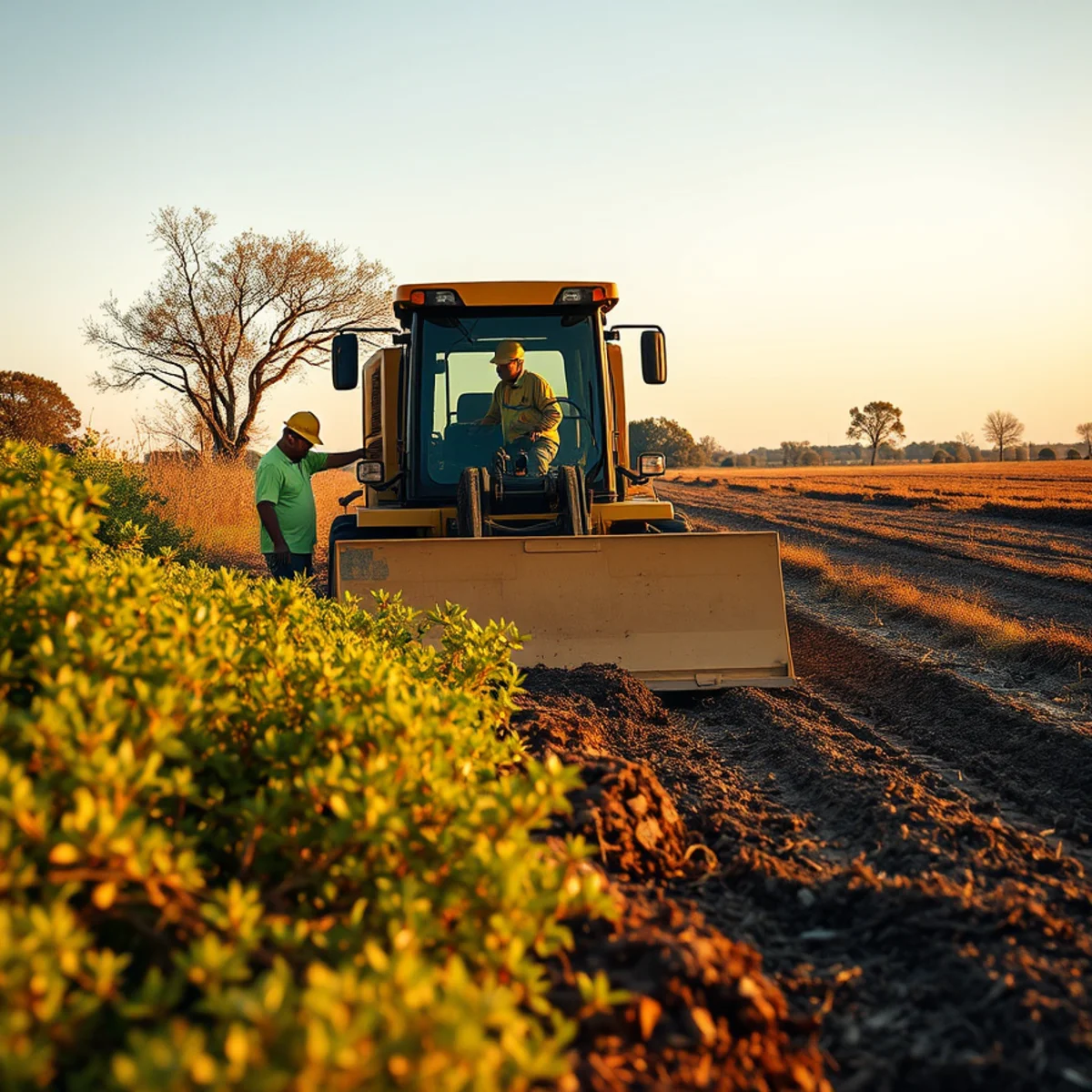
Related Tree & Yard Services
Ready for Land Clearing in Fort Worth?
Call Sion Tree Service for land clearing done safely, affordably, and cleanly — with a free, no-obligation estimate.
Open daily 6 AM–7 PM · Serving Fort Worth & the DFW metroplex