
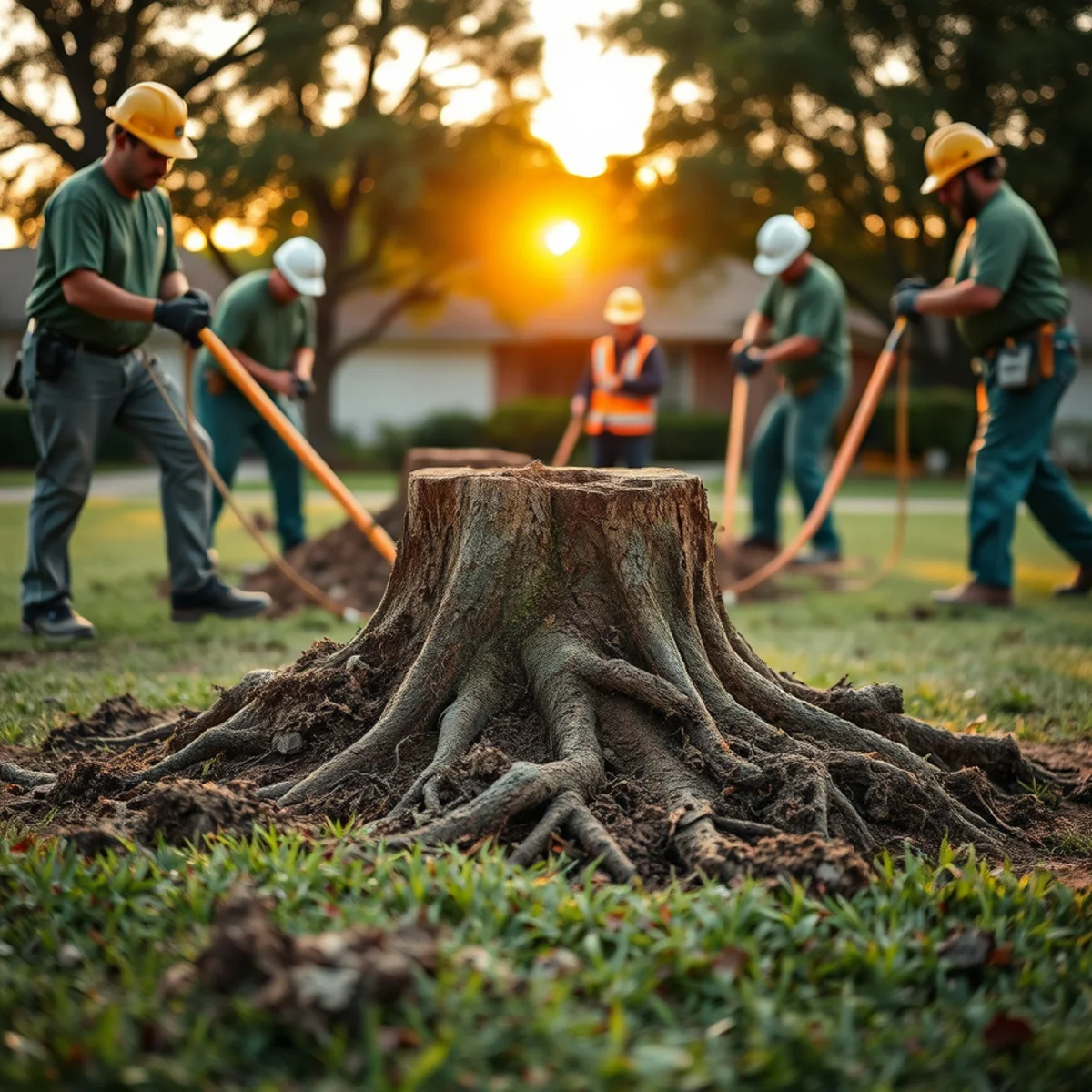
Stump Removal in Fort Worth, TX
Sion Tree Service handles complete stump removal in Fort Worth, TX, and across the wider DFW metroplex, taking out the stump and its root system so the spot is truly cleared rather than just ground down a few inches. Whether you have a single post oak stump in the front yard or a row of cedar elm and hackberry stumps left from a clearing job, our crew gets them out and leaves the ground ready for sod, a new tree, a patio, or a garden bed.
Sion Tree Service handles complete stump removal in Fort Worth, TX, and across the wider DFW metroplex, taking out the stump and its root system so the spot is truly cleared rather than just ground down a few inches. Whether you have a single post oak stump in the front yard or a row of cedar elm and hackberry stumps left from a clearing job, our crew gets them out and leaves the ground ready for sod, a new tree, a patio, or a garden bed.
A leftover stump is more than an eyesore. In North Texas it becomes a trip hazard near walkways, a magnet for termites and carpenter ants that can drift toward your home, and a source of stubborn sprouts from species like hackberry and crepe myrtle that keep trying to regrow. We remove the whole problem, haul away the debris, and restore the site so you would never know a stump was there.
What's Included
- On-site assessment of stump size, species, root spread, and nearby utilities or hardscape
- Marking and care around sprinkler lines, fences, walkways, and underground utilities before digging
- Excavation of the stump plus the main root flare and structural roots
- Cutting and sectioning large stumps for safe, controlled removal
- Removal and haul-away of the stump, roots, and dug-out wood debris
- Backfilling the cavity with soil and tamping it to reduce settling
- Raking and grading the surface so the area sits level and ready to replant or sod
- Full clean-up of the work zone, leaving the site like we were never there
- Texas811 utility-locate coordination before excavation so gas, water, fiber, and Oncor electric lines are flagged in your dig zone
- Severing of shared root grafts between the stump and nearby live oaks or red oaks to interrupt below-ground oak wilt transmission
- Probing and removal of large lateral roots running under turf, beds, walkways, and driveway edges, not just the central root ball
- Topsoil-quality backfill brought in when the excavated clay spoil is too rocky or chunky to settle level
- Optional grade match with screened fill and a thin compost layer so new sod or seed knits into the patch evenly
When to Call for Stump Removal
- A stump is right in a walkway, driveway edge, or play area where it's a trip hazard
- You see sawdust, mud tubes, ants, or beetles signaling termites or carpenter ants in old wood
- Sprouts and suckers keep growing back from a stump or its roots no matter how often you cut them
- You're planning to lay sod, build a patio, pour concrete, or replant where the stump sits
- You want the stump fully out rather than ground down, especially before landscaping or selling the home
- You are losing a live oak or red oak to oak wilt and want the stump and root grafts pulled so the fungus does not creep to neighboring oaks underground
- A previous contractor only ground the stump and you now have a soft, sinking depression or a ring of yellowing turf over the buried roots
- Roots from the old stump are lifting a sidewalk slab, cracking a driveway edge, or pushing into a foundation pier or sewer line
- You are tying the spot into new construction, a pool dig, a slab, or an irrigation trench where any buried wood has to be fully cleared
Why Stump Removal Pays Off
Stump and roots gone for good
We excavate the stump along with the major root flare and structural roots, not just the visible top. That removes the regrowth and decay problem at the source instead of leaving buried wood behind.
Eliminates trip and mower hazards
A stump hidden in turf is easy to catch with a foot or a mower deck. Pulling it out makes the yard safer for kids, guests, and your equipment, and opens the space back up for full use.
Stops pests before they spread
Decaying stumps draw termites, carpenter ants, and beetles that can move toward your house and other healthy trees. Full removal takes away the food and shelter that keep those colonies going.
Ends suckering and regrowth
Many DFW species push up new shoots from roots and a living stump. Removing the root mass stops hackberry, crepe myrtle, and similar trees from sprouting back season after season.
Frees the space for new plans
With the stump and roots out, you can replant a tree, lay sod, build a bed, pour a patio, or run an irrigation line without an obstruction underground in the way.
Clean, restored finish
We backfill the hole, tamp it, and clean up so the area sits level and ready. You get a usable spot, not a crater surrounded by wood chips and ruts.
How Our Stump Removal Works
Free on-site estimate
We come out, look at the stump, its size, species, and root spread, and check for sprinkler lines, utilities, and hardscape nearby. Then we give you a clear, written quote with no surprises.
Site prep and protection
Before any digging, we mark and work around irrigation, fences, and underground lines, and protect surrounding turf and beds so the rest of your yard stays intact.
Excavation and removal
We dig out the stump along with its root flare and major roots, sectioning larger stumps as needed, then load and haul away all the wood and debris.
Backfill and cleanup
We fill the cavity with soil, tamp and grade it level, rake the surface, and clean the whole area so it's ready for sod, a new tree, or your next project.
What Drives Your Stump Removal Cost in Fort Worth
Stump removal cost depends on the stump's diameter, the species and how deep and wide its roots run, soil conditions like our heavy North Texas clay, access for equipment, and how many stumps you need cleared. Full root removal takes more labor than simple grinding, so the scope matters. We give honest, free estimates with the quoted price equaling the final price, so you know exactly what you're paying before we start.
Removal versus grinding
Full stump and root excavation runs notably more than grinding the same stump because it is far more labor and equipment intensive and disturbs much more soil. You are paying to clear the entire root mass, not just shave the crown below grade.
Stump diameter and root spread
A wide post oak or pecan with a deep, far-reaching root flare takes more digging, cutting, and haul-out than a slender crepe myrtle. Price scales with how much wood and root is actually in the ground, not just the visible top.
North Texas clay and soil moisture
Our dense expansive clay is hard to break and slow to excavate, especially bone-dry in a drought or gummy after rain. Rocky or caliche-laced ground adds time and can mean trucking in clean backfill.
Proximity to utilities and hardscape
Stumps tight against sprinkler lines, sewer laterals, foundations, driveways, or fences require careful hand work and protective measures, which adds labor versus an open spot the machine can reach freely.
Equipment access to the stump
A backyard stump behind a narrow gate, on a slope, or boxed in by structures may need smaller machines, matting, or hand removal. Tight or obstructed access raises cost compared to a curbside front-yard stump.
Number of stumps and restoration scope
Clearing several stumps in one visit lowers the per-stump cost, while extras like imported topsoil, full grade-out, and sod-ready finishing add to it. The depth of site restoration you want is part of the quote.
The local details most companies skip — what every Fort Worth homeowner should understand about stump removal before the work begins.
Stump Removal, Root Grafts, and Oak Wilt in Fort Worth Yards
In older Fort Worth neighborhoods like Tanglewood, Rivercrest, and the TCU area, live oaks and red oaks planted close together often fuse roots below ground. Those root grafts are exactly how oak wilt moves from a dying tree to its healthy neighbors, with no beetle or above-ground contact required. When you take down an infected oak, the stump and its connected roots can keep that underground pathway open if they are only ground a few inches down.
Full excavation that pulls and severs the structural roots in the immediate area helps break that local root-graft bridge, which simple grinding cannot do because the root system stays in the soil. It is one of the clearest cases where complete removal earns its higher cost over grinding.
Timing matters as much as method
North Texas guidance is to avoid wounding oaks during the high-risk February-through-June window when the beetles that carry oak wilt spores are most active. We plan oak work and any pruning of nearby oaks around that calendar, paint fresh cuts on oaks year-round, and clean equipment between trees so we are not the ones spreading spores.
- Oaks within roughly 50 feet commonly share grafted roots in established DFW yards
- Grinding leaves those roots and the underground disease pathway intact
- Full root removal severs the local grafts the same time the stump comes out
- We avoid fresh wounds on surrounding live and red oaks during peak oak wilt season
Backfill, Settling, and Sinkhole Prevention in North Texas Clay
Pulling a stump and its roots leaves a real cavity, and how that hole is filled determines whether your yard ends up level or sunken. Tarrant County's expansive clay swells when wet and shrinks when dry, so a loosely backfilled pit can collapse into a soft, ankle-turning depression months after the crew leaves. That is the most common complaint homeowners have after a careless removal.
How we backfill so it stays level
We do not just shovel the same chunky spoil back in and walk away. We fill in compacted lifts, tamp each layer, and leave the surface crowned slightly high so it settles down to grade instead of below it. Where the native clay is too rocky to pack evenly, we bring in screened fill or topsoil and finish with a thin compost layer so new sod or seed takes hold.
Why a decaying buried stump is worse than a clean hole
Leaving wood in the ground is its own slow problem. As roots and chips rot they pull nitrogen from the soil and leave a yellow, stunted ring in the turf, and the soft pocket of decomposing wood can subside over time. Removing the wood entirely and backfilling with clean fill avoids both the sinking and the dead-grass ring.
- Loose, un-tamped backfill is the main cause of post-job sinkholes and low spots
- We compact in lifts and crown the surface so it settles flat
- Screened fill or topsoil replaces clay spoil that is too coarse to pack
- Removing the wood prevents the nitrogen-starved yellow ring that decay leaves behind
When Full Removal Beats Grinding for Fort Worth Homeowners
Grinding is faster, cheaper, and less disruptive, and for a lot of yards it is the right answer. Full root removal is the better spend when you genuinely need the ground clear or need to stop a below-ground problem at the source, and we will tell you honestly which camp your stump falls into rather than upselling the bigger job.
Choose full removal when
- You are replanting a tree in the same footprint and do not want it fighting old roots and buried wood
- You are building a slab, patio, pool, or driveway where no wood can be left in the ground
- You have an oak wilt situation and want the connected roots severed, not left behind
- A suckering species like hackberry, chinaberry, or crepe myrtle keeps sprouting from the roots
- Termites or carpenter ants are already working the old wood near your house
Grinding is usually enough when
- You just want the trip hazard and eyesore gone and plan to grow grass over it
- The stump is far from structures, hardscape, and other trees
- You are on a tighter budget and can accept roots decomposing in place over time
Either way, ask any contractor to put the method, the depth, the haul-away, and the final restoration in writing before work starts, and to confirm Texas811 located your utilities first. That paper trail is your protection if a line is hit or the finished grade is not what was promised.
Smart Homeowner Tips Before You Hire Anyone
A few habits that protect your wallet, your property, and your insurance claim — whether you hire us or not.
Always confirm Texas811 was called and lines were marked before anyone digs near your stump, since a struck gas or fiber line is on the contractor, not you, only if they followed the locate process.
Decide up front whether you truly need full removal or just grinding, because removal costs more and tears up more turf and should be reserved for replanting tree-on-tree, hardscape, or oak wilt situations.
If the stump is within a few feet of a foundation, pool deck, retaining wall, or driveway, insist the crew hand-dig and probe rather than yank with a machine that can crack hardscape or pier.
Ask exactly what goes back in the hole, because dumping the same rocky clay spoil back loose is what causes the soft sinking spot a year later.
Keep any stump-grindings or wood chips at least six inches off your foundation and slab, since that decaying wood draws the same termites and carpenter ants you are trying to get rid of.
Get the cleanup, haul-away, backfill, and final grade spelled out in the written quote so you are not handed a crater and a pile of mud after the saw stops.
Stump Removal Across Fort Worth & DFW
Serving Fort Worth and the surrounding Dallas–Fort Worth metroplex, seven days a week.
Fort Worth neighborhoods we work in often:
Trusted by Local Homeowners
“Sion Tree Service did an outstanding job trimming the trees at my home. The crew of 6 came in and quickly removed all the dead limbs and trees that needed to come out. Their cleanup was amazing! Highly recommend them!”
“Very fast work, arrived right on time, workers very professional and cleaned up before leaving. The price was what was quoted. I'd recommend them to anyone needing tree trimming. I'll be using them again!”
“Great communication and super responsive. Squeezed me in the next day and did an awesome job removing and grinding a large tree that had fallen in a storm. Have used them twice with great service both times.”
Stump Removal FAQs
Stump removal pulls out the entire stump and its major roots, leaving a hole we backfill and an area you can fully build on or replant in. Grinding only chips the stump down a few inches below grade and leaves the root system in the ground. Removal costs more and disturbs more soil, but it's the right call when you need the space truly clear or want to stop regrowth and pests. If you'd rather keep it simpler, ask us about stump grinding.
Once we take out the stump and its main structural roots, the tree can't push up new sprouts, so regrowth stops. That's a big advantage over grinding for species like hackberry and crepe myrtle that love to sucker. Small fine roots left in the soil simply decompose and won't regrow on their own.
Yes, and we plan for it. Before digging we locate and work carefully around irrigation, utilities, fences, and foundations so nothing nearby gets damaged. Tight spots may take more hand work, which we'll note in your free estimate up front.
We haul away the stump, roots, and all the wood debris, then backfill the cavity with soil and tamp it down to limit settling. We grade and rake the surface so it sits level and ready for sod, seed, a new tree, or whatever you're planning. Clean-up is part of every job, so the area is left tidy.
We're open daily from 6 AM to 7 PM and respond quickly, often same-day or next-day for an estimate and frequently soon after for the work. Timing depends on stump size, access, and how booked the week is. Call us and we'll give you a realistic schedule along with your free quote.
Yes, in many North Texas yards oaks within roughly 50 feet share interconnected roots, and oak wilt can travel through those grafts to healthy live oaks and red oaks. Full excavation that pulls and severs the structural roots breaks that underground bridge in the immediate area, which grinding alone does not do because it leaves the root system intact. We coordinate this with proper timing and avoid wounding nearby oaks during the high-risk February through June window.
Any excavated cavity will settle as the disturbed clay consolidates, and if it is loosely dumped back you can get a soft low spot months later. We backfill in lifts, tamp each layer, and crown the surface slightly high so that when it settles it ends up level rather than dished. In our heavy Tarrant County clay we often bring in screened fill or topsoil because the chunky native spoil does not pack down evenly on its own.
As buried roots and chips decompose they pull nitrogen out of the surrounding soil, which starves the turf and leaves a pale or stunted ring, a problem grinding can leave behind because the wood stays in the ground. Full root removal takes out that decaying wood so you are not fighting nitrogen-poor soil and fungal sprouts for years. If you replant in a ground-stump spot without removal, plan on adding nitrogen and fresh soil to compensate.
For sod or a flower bed you can usually finish within days once we backfill and grade. For a new tree, giving the soil several months to settle and the remaining fine roots time to break down produces a more stable, even planting site, so many homeowners wait a season. We will tell you whether the spot is ready right away or worth letting settle based on the species and how wet the clay is at the time.
Ask for a current certificate of insurance with general liability and workers' compensation, and call the carrier or agent listed to confirm it is active, not just a printout. For anyone calling themselves a certified arborist, you can check the credential through the International Society of Arboriculture's public verification tool. A legitimate company will hand over proof without pushback and will not ask for full payment in cash up front before any work is done.
Related Tree & Yard Services
Stump Grinding
We grind stumps below grade and leave your lawn clean and ready to replant.
Learn MoreTree Removal
Safe removal of dead, storm-damaged & large trees, with full cleanup and haul-away.
Learn MoreLand Clearing
Lot, pasture & brush clearing with full haul-away, ready for your next project.
Learn MoreReady for Stump Removal in Fort Worth?
Call Sion Tree Service for stump removal done safely, affordably, and cleanly — with a free, no-obligation estimate.
Open daily 6 AM–7 PM · Serving Fort Worth & the DFW metroplex