
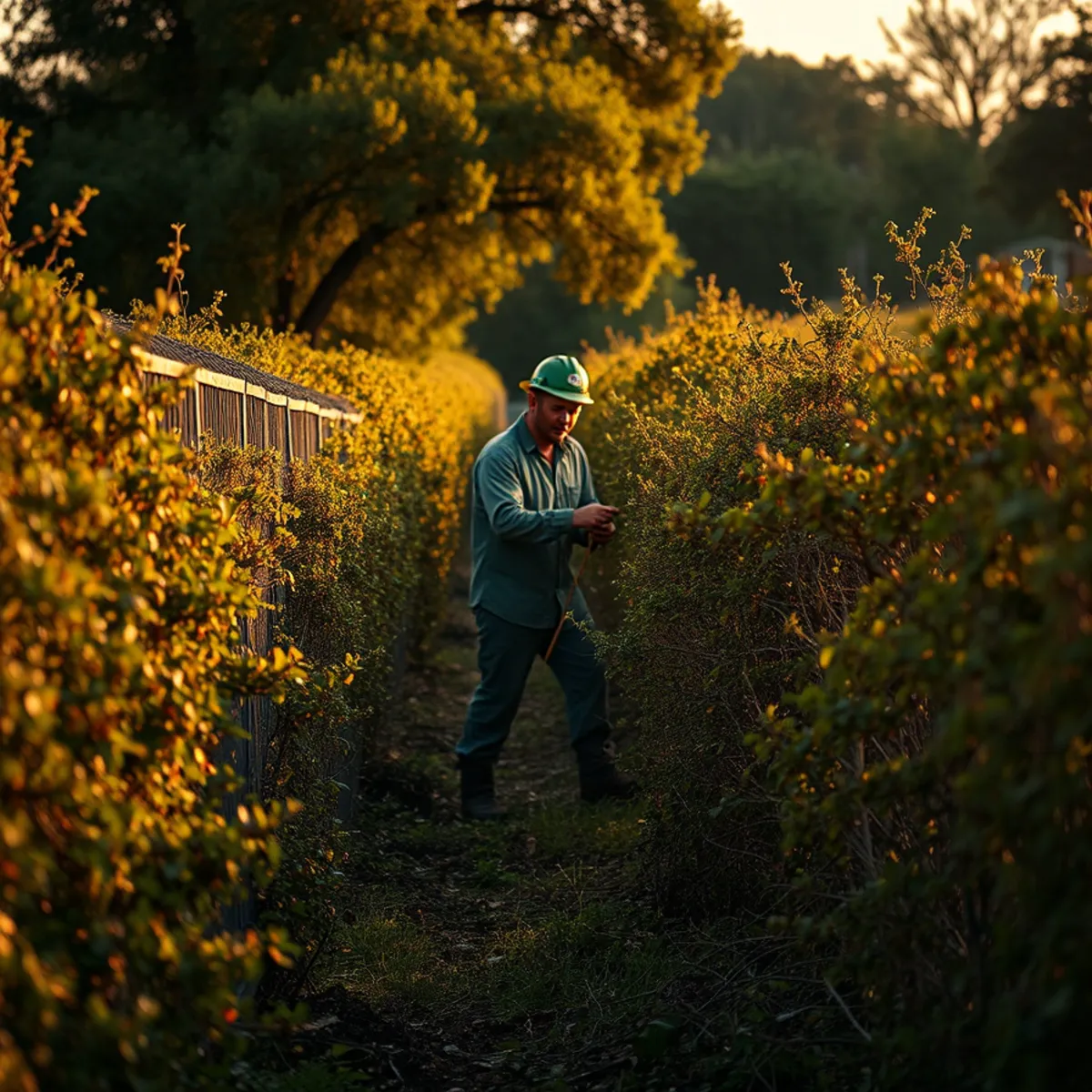
Brush Clearing in Fort Worth, TX
Brush clearing in Fort Worth is how you take an overgrown, tangled patch of land and turn it back into something you can actually use. Sion Tree Service clears thick undergrowth, choking vines, briars, volunteer hackberry and cedar elm saplings, and overgrown fence lines across the DFW metroplex, then hauls every bit of it away so the site looks like we were never there. Whether it's a back corner that got away from you, a fence line swallowed by greenbrier and poison ivy, or acreage you want to reclaim, we handle the heavy, thorny, dirty work.
Brush clearing in Fort Worth is how you take an overgrown, tangled patch of land and turn it back into something you can actually use. Sion Tree Service clears thick undergrowth, choking vines, briars, volunteer hackberry and cedar elm saplings, and overgrown fence lines across the DFW metroplex, then hauls every bit of it away so the site looks like we were never there. Whether it's a back corner that got away from you, a fence line swallowed by greenbrier and poison ivy, or acreage you want to reclaim, we handle the heavy, thorny, dirty work.
Left alone, North Texas brush spreads fast. Our clay soil and wet springs push hackberry, ligustrum, Ashe juniper ("cedar"), and chinaberry into dense thickets that hide fences, crowd good trees, and stack up dry fire fuel through our long, hot summers. We come in with the right equipment and trained crews, clear the overgrowth at the source, and leave you a clean, open, walkable property, all for an honest price we quote before we start.
What's Included
- Clearing of dense undergrowth, weeds, and overgrown vegetation down to ground level
- Removal of vines, greenbrier, poison ivy, and briar tangles from trees and fences
- Cutting and removal of small volunteer trees and saplings (hackberry, ligustrum, chinaberry, cedar)
- Fence-line clearing to free fencing from encroaching brush and growth
- Cutting back overgrowth from driveways, paths, sheds, and structures
- Selective clearing that protects the mature trees you want to keep
- Fire-fuel reduction by removing dead brush, deadfall, and dry undergrowth
- Complete haul-away of all cut brush, vines, and debris, with the site raked clean
- Forestry mulching and on-site mastication of brush, cedar, and saplings where you want the chip left as erosion-suppressing ground cover instead of hauled off
- Cut-stump and root-collar treatment on aggressive regrowers like hackberry, chinaberry, and ligustrum so they don't resprout from the stump
- Trail, footpath, and equipment-access lane cutting through wooded back acreage and creek-bottom thickets
- Clearing along Oncor easements and utility right-of-ways to keep brush off service drops and meters (coordinated, never on the energized line itself)
- Storm-debris and deadfall cleanup of broken limbs, snapped saplings, and downed brush after DFW spring hail, wind, and derecho events
When to Call for Brush Clearing
- A fence line or property edge has disappeared under brush, vines, and briars
- Back acreage or a vacant lot needs to be reclaimed for use, sale, or building
- Dense, dry undergrowth has built up close to your home or outbuildings as fire fuel
- Volunteer saplings and invasive growth are crowding out the trees you want to keep
- Overgrowth is hiding snakes, pests, or trash and you want the area opened back up
- You're prepping a lot for a survey, fence install, septic inspection, or sale and the appraiser or buyer can't see the ground
- A code-enforcement or HOA notice in Fort Worth has cited tall weeds, overgrowth, or an unmaintained lot
- Greenbrier, English ivy, or wisteria has climbed into the canopy of a tree you want to keep and is pulling on limbs
- Wet-spring growth on expansive clay has erupted faster than your mower can keep up and a brush hog can no longer get through
Why Brush Clearing Pays Off
Reclaim usable land
Overgrown corners, side yards, and back acreage get cleared back to open, walkable ground you can mow, fence, build on, or simply enjoy again instead of fighting through every season.
Reduce fire fuel
Dense, dry brush and dead undergrowth are ladder fuel during a North Texas summer. Clearing it back and hauling it off lowers the fire load near your home, outbuildings, and property lines.
Cleared and hauled, not just cut
We don't leave you a pile to deal with. Brush, vines, briars, and small trees are removed and hauled away, so the job is genuinely finished when we drive off.
Protect your good trees
Clearing out competing volunteer saplings, vines, and invasive growth gives your post oaks, live oaks, and pecans room, light, and water without the constant choke of overgrowth.
Open up fence lines
We free fence lines from greenbrier, poison ivy, and encroaching brush so your fencing stays accessible, repairable, and visible instead of buried in a green wall.
Cut down pests and snakes
Thick brush and tall undergrowth give cover to snakes, rodents, mosquitoes, and ticks. Opening the area up removes that habitat and makes your property safer to walk.
How Our Brush Clearing Works
Free on-site estimate
We walk the property with you, look at the overgrowth, density, and access, and give you a clear, written quote with no surprises. The estimate is free.
Plan and protect
We map out what gets cleared and what stays, flagging the good trees and structures to protect, and confirm access and any fence lines or features to work around.
Clear the overgrowth
Our crew clears undergrowth, vines, briars, and small trees with the right equipment, working safely and cutting the growth back at the source, not just the tops.
Haul away and clean up
We remove every bit of brush and debris, rake the site down, and haul it all off, leaving you open, clean, usable ground.
What Drives Your Brush Clearing Cost in Fort Worth
Brush clearing cost depends on the size of the area, how dense and thorny the overgrowth is, the type and number of small trees and vines, site access, and how much material has to be hauled away. A half-acre of light undergrowth is a very different job than a fence line buried in greenbrier or acreage full of cedar and hackberry. That's why we always start with a free, no-obligation estimate and give you one honest, quoted price before any work begins.
Density and thorniness
A half-acre of light grassy undergrowth clears quickly, while the same area choked with greenbrier, cedar, and intertwined saplings is slow, hard-on-equipment work that costs more per acre.
Method chosen
On-site forestry mulching is often faster and cheaper per acre than cut-and-haul because nothing leaves the site, while full haul-away adds labor, truck time, and disposal cost.
Haul distance and dump fees
If material is hauled off, the volume of debris, the number of truckloads, and the distance and tipping fees at the disposal site all feed into the price.
Terrain and access
Sloped lots, soft or wet clay, narrow gates, and tight back-acreage access slow machines down or force hand work, all of which raise the cost versus open, drive-on-it ground.
Stump and regrowth treatment
Adding cut-stump treatment, root-collar work, or grinding to stop resprouting is extra scope beyond simply cutting the brush back.
Tree size thresholds and permits
If the job crosses into protected-tree territory or a parcel over one acre, any required Urban Forestry permitting and the larger trees themselves change the scope and the quote.
The local details most companies skip — what every Fort Worth homeowner should understand about brush clearing before the work begins.
Brush Clearing Methods for North Texas Lots: Mulch in Place or Cut and Haul
There's no single right way to clear overgrown land in Fort Worth, and the honest answer is that the method should match your lot, your soil, and what you plan to do with the ground afterward. The two main approaches are forestry mulching, which grinds brush and small trees into a chip layer left on-site, and traditional cut-and-haul, which removes the material entirely and leaves clean, open dirt. We choose based on your property, not on which machine happens to be on the trailer.
When on-site mulching wins
- Back acreage, creek bottoms, and wooded edges where a chip mat looks natural and nobody's going to mow it
- Sloped or erosion-prone clay where leaving roots and a protective chip layer holds soil far better than scraping to bare dirt
- Cedar, yaupon, and dense sapling thickets that a mulcher can chew through faster than a crew can drag and load
- Sites where you'd rather not pay to truck and dump material that can stay and feed the soil
When full haul-away wins
- Near the house, finished landscaping, fence lines, and turf you intend to mow or re-seed
- Lots you're prepping for a fence install, a slab, a pool, or a clean survey where a chip layer is in the way
- Greenbrier and poison ivy tangles that should be bagged and removed rather than ground up and left scattered
- Smaller residential corners where one tidy job and a raked-clean finish matters more than soil cover
On North Texas expansive clay, timing and machine choice matter as much as the method. Running heavy equipment across saturated clay after a wet spring leaves deep ruts and kicks off erosion, so we read the ground conditions and, on soft or sloped sites, lean toward lower-impact work rather than churning your lot into a mud bog.
Fire-Fuel Reduction and Defensible Space Around DFW Homes
After the dry stretches and drought-cured grass North Texas sees most summers, dense brush against a house is exactly the ladder fuel that turns a grass fire into a structure fire. Texas wildfire-preparedness guidance organizes the work around the home ignition zone, the band of space around your house where what you clear most directly affects whether the building survives. Brush clearing is the practical, ground-level part of building that buffer.
How the zones around your home work
- Immediate zone, 0 to 5 feet: keep this band clear of dead brush, vines on the wall, and dry leaf litter packed against the foundation and under decks
- Intermediate zone, 5 to 30 feet: break up continuous brush, remove ladder fuel growing under keeper trees, and open gaps so a surface fire can't climb into the canopy
- Extended zone, 30 feet and beyond: thin out heavy thickets, dead undergrowth, and downed deadfall so a fire stays low and slow instead of running
This is also why we never pile-burn poison ivy or brush on a dry, windy day, and why you should confirm there's no Tarrant, Parker, Johnson, Denton, or Dallas county burn ban before anyone strikes a match on a debris pile. The goal is to get fuel off the property, not to trade a brush problem for a fire you started.
What we prioritize clearing first
- Dry, dead brush and cured undergrowth within 30 feet of the home, outbuildings, and propane or fuel storage
- Cedar and juniper, which are resinous and burn hot and fast, crowded near structures
- Brush bridging from the wildland edge toward the house that gives a fire a continuous path to follow
Fort Worth Permits, Protected Trees, and Property-Line Realities
Most residential brush clearing in Fort Worth doesn't require a permit, because the city's tree rules are written around trees, not undergrowth. Brush, vines, briars, shrubs, and small saplings below the protected size are generally fair game to clear. The line you don't want to cross by accident is the one between brush and a protected tree, because that's where city ordinances and real penalties come into play.
Where brush clearing crosses into permit territory
- A sapling that's actually grown into a tree at or above roughly 6 inches DBH (diameter at breast height) can fall under tree-protection rules
- Significant and Heritage trees, including larger post and blackjack oaks, carry their own protections regardless of how overgrown the area looks
- Parcels larger than one acre, and multi-unit properties, can trigger an Urban Forestry permit even for clearing work
- Fort Worth strengthened its tree ordinance in 2025 with steep per-inch penalties for unauthorized removal of oaks and other protected trees
During the free estimate, we walk the property and point out anything that's outgrown the brush category so you can make an informed call before a saw touches it. When in doubt, the city's Urban Forestry office is the authority on a specific tree, and we'd rather you confirm than guess.
Property lines, easements, and what's underground
- We confirm the actual property line before clearing a fence row, so you're not cutting a neighbor's brush or trees without their okay
- Oncor easements and right-of-ways near the work get identified up front, and we keep crews and machines clear of energized lines
- Sprinkler heads, septic lines, drip lines, and shallow utilities get flagged before machinery moves, because what the crew can't see, the crew can break
Smart Homeowner Tips Before You Hire Anyone
A few habits that protect your wallet, your property, and your insurance claim — whether you hire us or not.
Get the scope in writing before work starts, specifically whether stumps, root treatment, and haul-away are included, because cut-only quotes look cheaper but leave you a resprouting mess and a debris pile.
Verify any contractor's liability and workers' comp insurance and ask for a certificate, since brush clearing involves chainsaws, machinery, and thorny climbing fuels where an injury on your property can become your problem.
On post oaks, live oaks, and red oaks you want to keep, avoid wounding the trunk during clearing between February and June, the high-risk window for oak wilt transmission in North Texas.
Ask whether overgrowth near the house is in your 0-to-30-foot home ignition zone, and prioritize clearing dry ladder fuel there first if wildfire is a concern.
Never let a crew pile-burn poison ivy or brush on a dry, windy DFW day, and confirm there's no county burn ban in effect before any on-site burning is even discussed.
Walk the property line and mark any Oncor easements, sprinkler heads, septic lines, and buried utilities before the crew arrives so machinery doesn't damage what it can't see.
Brush Clearing Across Fort Worth & DFW
Serving Fort Worth and the surrounding Dallas–Fort Worth metroplex, seven days a week.
Fort Worth neighborhoods we work in often:
Trusted by Local Homeowners
“Sion Tree Service did an outstanding job trimming the trees at my home. The crew of 6 came in and quickly removed all the dead limbs and trees that needed to come out. Their cleanup was amazing! Highly recommend them!”
“Very fast work, arrived right on time, workers very professional and cleaned up before leaving. The price was what was quoted. I'd recommend them to anyone needing tree trimming. I'll be using them again!”
“Great communication and super responsive. Squeezed me in the next day and did an awesome job removing and grinding a large tree that had fallen in a storm. Have used them twice with great service both times.”
Brush Clearing FAQs
Brush clearing focuses on undergrowth, vines, briars, overgrown vegetation, and small volunteer trees, while leaving the ground and any mature trees you want largely in place. Full land clearing goes further, removing stumps and prepping a site down to bare dirt for construction. If you're not sure which you need, we'll tell you straight during the free estimate.
We haul it all away. Complete clean-up and haul-off are part of every job, so when we leave, the brush, vines, and debris are gone and the site is raked clean. You won't be left staring at a pile you have to burn or pay someone else to remove.
Yes. We do selective clearing, flagging and protecting your mature post oaks, live oaks, pecans, and other keepers while we remove the competing undergrowth, vines, and volunteer saplings around them. Clearing out that competition actually helps your good trees by giving them more light, water, and room.
It helps a lot. Thick brush and tall undergrowth give snakes, rodents, ticks, and mosquitoes the cover and habitat they need. Opening the area up and hauling off the debris removes that cover and makes the property noticeably safer and easier to walk.
Usually quickly. We serve Fort Worth and the wider DFW metroplex and often schedule estimates and work same-day or next-day. We're open daily from 6 AM to 7 PM, so call (208) 635-2100 and we'll find a time that works for you.
Brush, shrubs, vines, and small saplings under the city's protected-tree size are generally not regulated, so most residential brush clearing needs no permit. The rules tighten once you touch trees at or above 6 inches DBH (diameter at breast height), Significant or Heritage trees, or any parcel larger than one acre, which can trigger an Urban Forestry permit. We flag anything on your property that crosses into protected-tree territory during the free estimate so you never get blindsided by a city fine.
It depends on the property. Forestry mulching grinds the brush into a chip layer left in place, which suppresses regrowth, holds moisture, and protects bare clay from washout, making it a strong choice for back acreage and slopes. Full haul-away leaves clean, open ground and is better near homes, fences, and finished yards where a chip mat looks unfinished or you plan to mow, build, or fence. We'll walk you through which fits your site and your budget.
Cutting alone invites fast-resprouting species like hackberry, chinaberry, ligustrum, and greenbrier to come right back from the stump and roots. We can treat cut stumps and root collars at the time of clearing to knock down that regrowth, and on-site mulching adds a chip layer that smothers a lot of new seedlings. For lasting results, plan on a follow-up maintenance pass the first year or two while the root reserves burn off.
Yes. We never burn poison ivy, poison oak, or poison sumac because the smoke carries the urushiol oil and is genuinely dangerous to breathe. Our crews bag and haul that material off rather than pile-burning it, and we work it carefully so the oil isn't slung around your yard. If you've got a fence line buried in greenbrier and poison ivy, that's a job to leave to a crew with the right protection.
We can, and the method matters on North Texas clay. Heavy machines on saturated expansive clay leave deep ruts and accelerate erosion, so on slopes and creek bottoms we favor lower-impact mulching that leaves a protective chip layer, and we time wet-season work around the ground conditions. Leaving roots and a chip mat in place on a graded slope is far better for holding soil than scraping it to bare dirt.
Related Tree & Yard Services
Ready for Brush Clearing in Fort Worth?
Call Sion Tree Service for brush clearing done safely, affordably, and cleanly — with a free, no-obligation estimate.
Open daily 6 AM–7 PM · Serving Fort Worth & the DFW metroplex