Why Professional Tree Removal Is Safer Than DIY
A leaning post oak or a storm-cracked cedar elm in your Fort Worth yard can make a Saturday chainsaw project feel tempting. Rent a saw, borrow a ladder, drop the tree, save some money. But tree removal is one of the most dangerous home tasks people attempt, and the things that go wrong tend to go wrong fast and expensively. Gravity, stored tension in a leaning trunk, and a spinning chain do not give second chances.
This is not a scare pitch. It is a plain look at what makes professional tree removal safer, and where DIY attempts in North Texas most often go sideways. If you understand the real risks, the decision usually makes itself.
Chainsaws and ladders are a bad combination
Most serious DIY tree injuries trace back to two tools used together: a chainsaw and a ladder. A chainsaw needs both hands and stable footing. A ladder gives you neither once the saw bites, kicks back, or the cut piece shifts. Add the recoil energy of a chain catching a knot and you have a real chance of falling, cutting a leg, or losing balance with a running saw.
Common ways homeowners get hurt:
- Kickback when the bar tip touches wood, snapping the saw back toward the face and neck
- Overreaching from a ladder so the cut piece swings and knocks the ladder out
- Pinched bars in a leaning trunk that bind the saw and jerk the operator
- Fatigue and dull chains late in the job, when most accidents actually happen
- Cutting overhead, where falling limbs and sawdust hit the eyes and head
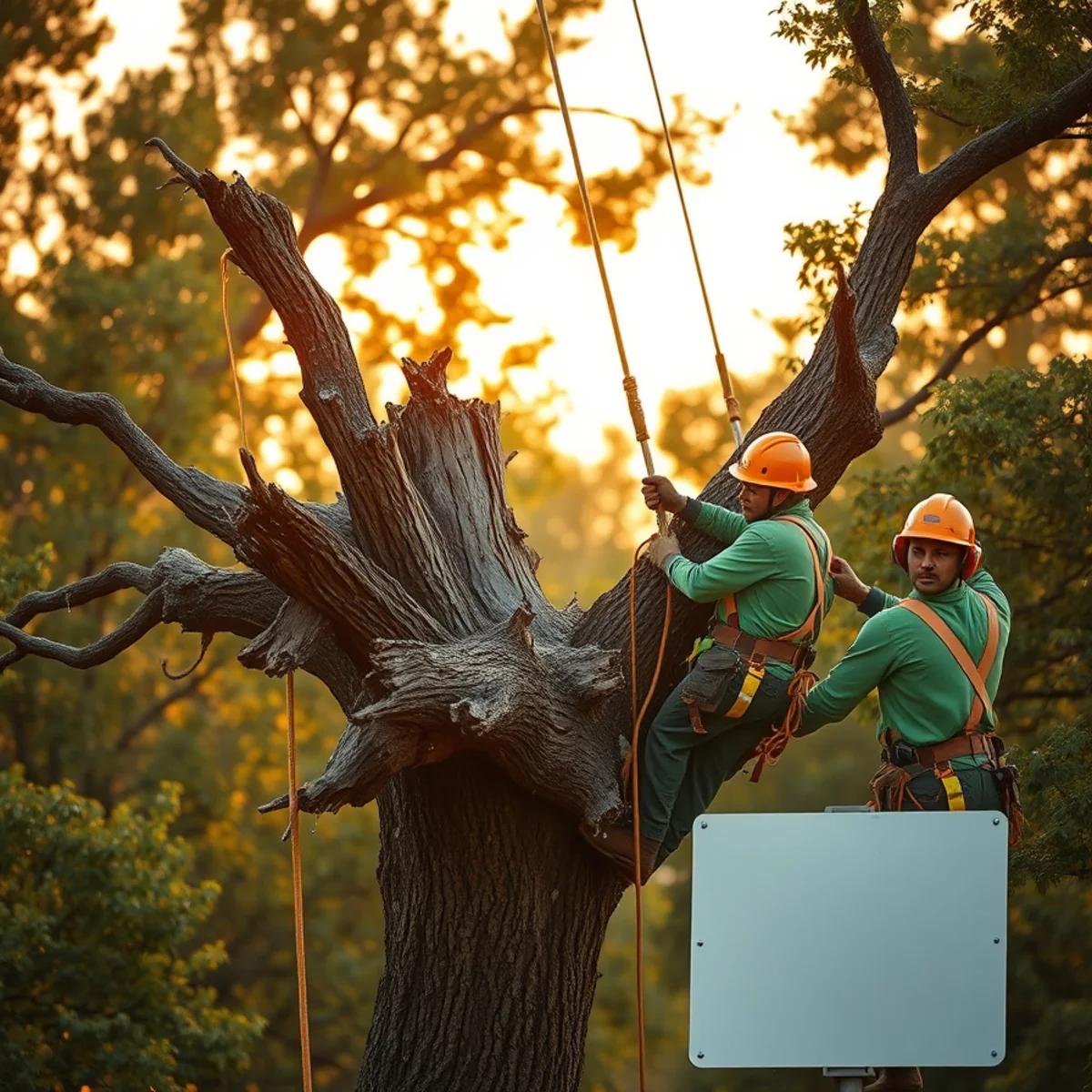
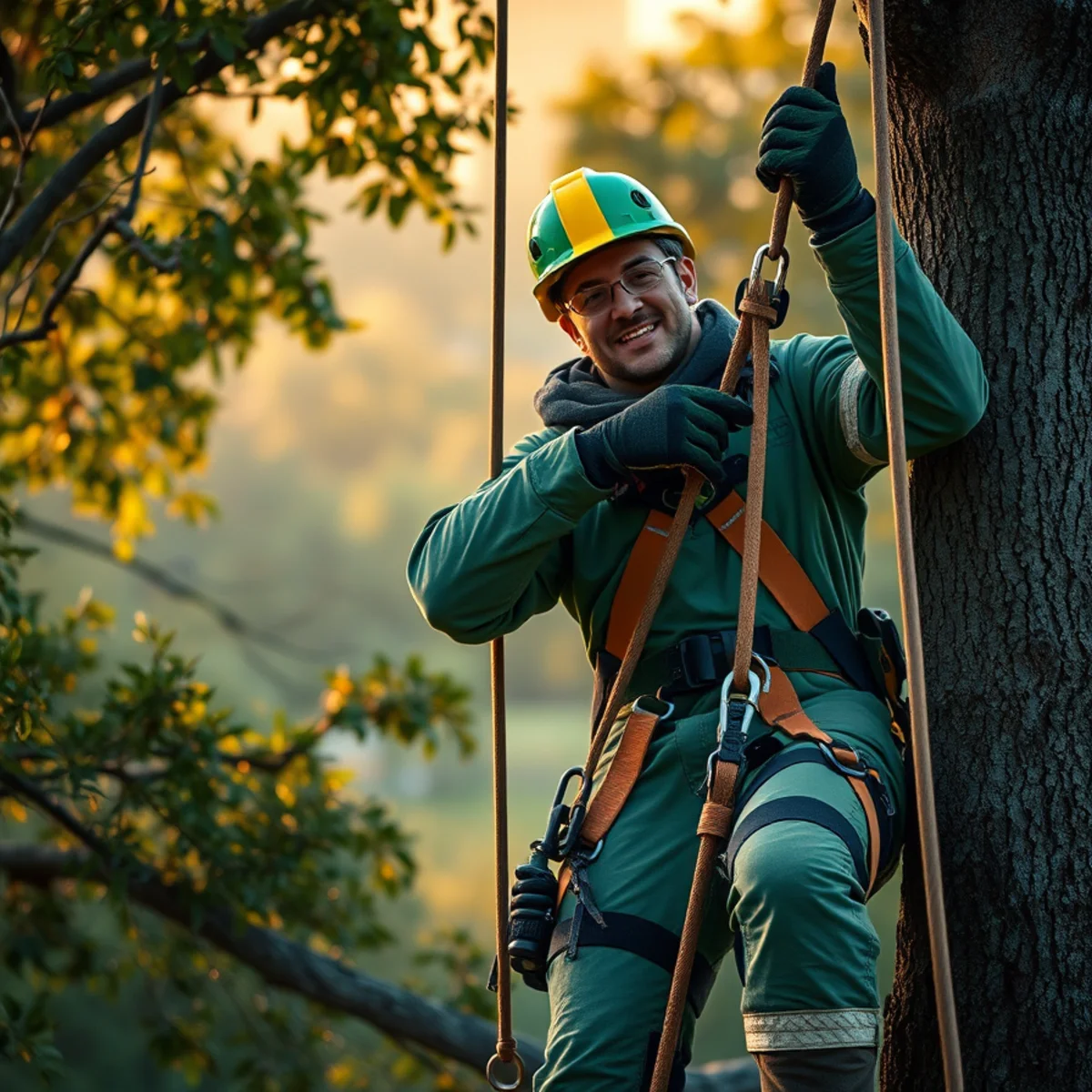
Trained climbers work from ropes, saddles, and lifts designed to keep both hands free and both feet anchored, with cuts planned so the saw is never fighting the wood.
Tree weight and felling direction are easy to misjudge
Wood is far heavier than people expect. A single green oak or pecan limb can weigh hundreds of pounds, and a full trunk runs into the thousands. Once that weight starts moving, nothing you can do by hand will stop or redirect it.
The hard part is controlling where it goes. A felling cut has to account for the tree's natural lean, the wind, the weight distribution of the canopy, and any decay hidden inside the trunk. North Texas trees add their own quirks. Post oaks and live oaks often have heavy, uneven lateral limbs. Storm-damaged or drought-stressed trees, and trees still carrying cracks from the February 2021 freeze, can have rotten cores that fail unpredictably mid-cut. A pro reads lean, sets a proper notch and hinge, and uses ropes or a crane to guide the fall. A guess from the ground does not.
Power lines turn a yard job into a fatal one
Many removals in established Fort Worth neighborhoods sit close to overhead service lines, the drop running to your house, or a transformer. Trees and power do not mix. You do not have to touch a line to be hurt. Electricity can arc across a gap, and a limb or wet rope can conduct a lethal charge.
Working near energized lines is regulated, specialized work. Professional crews keep proper clearances, coordinate with the utility when a line needs to be de-energized, and use non-conductive tools and procedures. A DIY drop that brushes a service line can knock out power to the block, energize a fence, or worse. This is the single clearest case where calling a pro is not optional.
Property damage costs more than the job you saved on
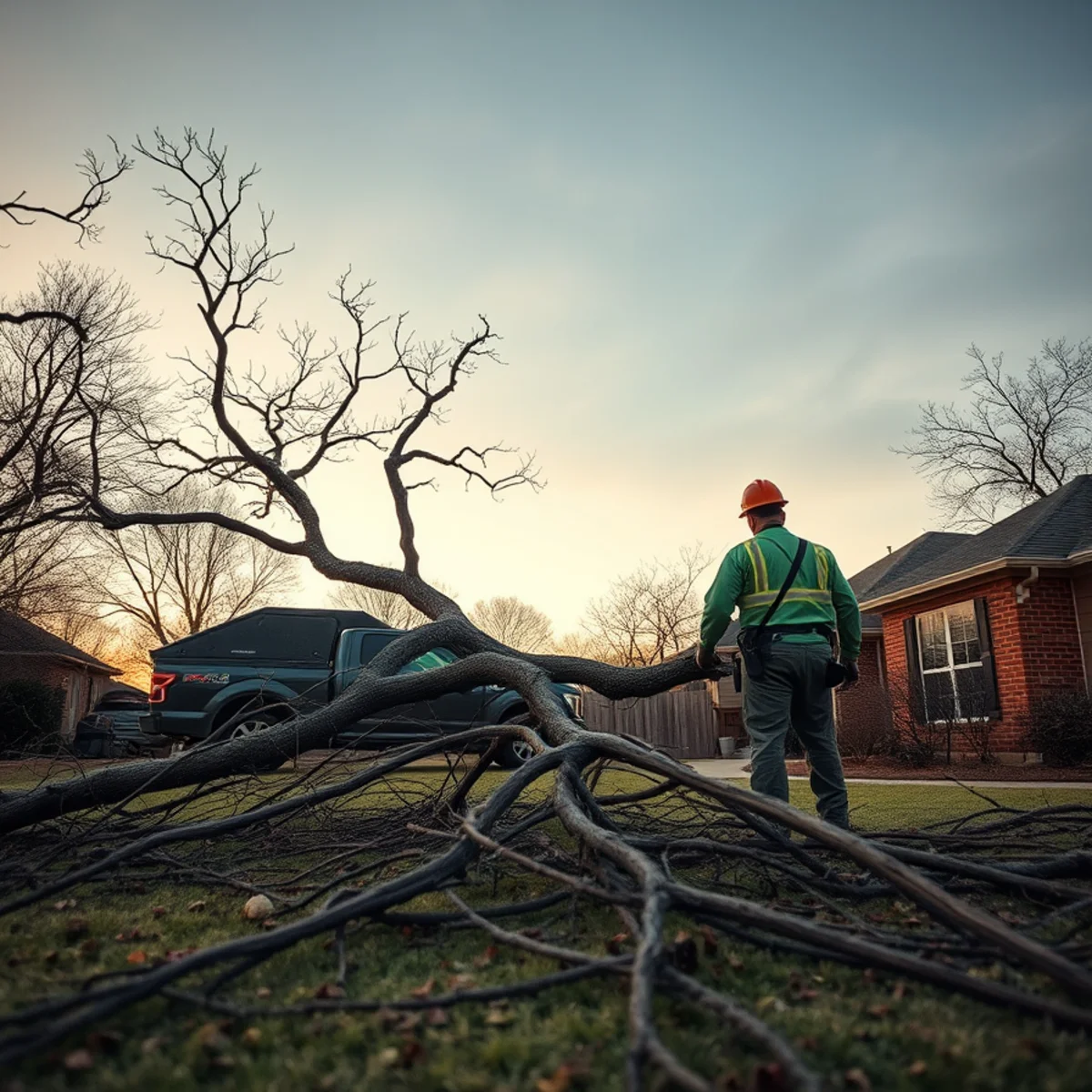
When a fell goes wrong, the tree usually lands on the most expensive thing nearby: a roof, a fence, a parked truck, an HVAC unit, a neighbor's garage, or a pool. The money you hoped to save on professional tree removal evaporates the moment a trunk crushes a roofline, and now you are managing a repair, not a yard cleanup.
There is also the mess. Half-finished DIY removals leave hung-up limbs, a standing spar, and piles of brush that sit for weeks. A reputable crew plans the drop zone, rigs sections down in a controlled way over tight spaces, and hauls everything off so the site looks like the tree was never there. The clean-up alone is a real part of the value.
Equipment, insurance, and liability you do not have
Doing the job right takes more than a rented saw. Professionals bring gear that is expensive to own and dangerous to use untrained:
- Climbing saddles, ropes, and rigging to lower limbs piece by piece
- Bucket trucks or cranes for large or tight removals
- Chippers and trucks to haul brush and wood the same day
- Stump grinders to finish below grade
- Helmets, chaps, eye and hearing protection rated for the work
The bigger gap is liability. A licensed and insured company carries coverage so that if something is damaged, it is their problem to fix, not yours. If a neighbor or a helper is hurt during your DIY job, that exposure lands on you. Hiring a pro moves that risk off your shoulders entirely.
When DIY might be fine, and when to stop
Small, low jobs well away from structures and lines can be reasonable to handle yourself: a sapling, a few low limbs you can reach from the ground, light brush. The line to draw is honest and simple.
- If the tree is taller than you can safely reach from the ground, stop
- If it leans toward a house, fence, line, or vehicle, stop
- If it is near any power line, stop and call a pro
- If the trunk shows rot, cracks, or storm damage, stop
- If you would need a ladder and a chainsaw at the same time, stop
One more North Texas note: avoid pruning or cutting on oaks from February through June, when oak wilt spreads most easily. If oak work cannot wait, a pro can seal fresh cuts and time the job to protect the rest of your trees.
Get a free estimate from Sion Tree Service
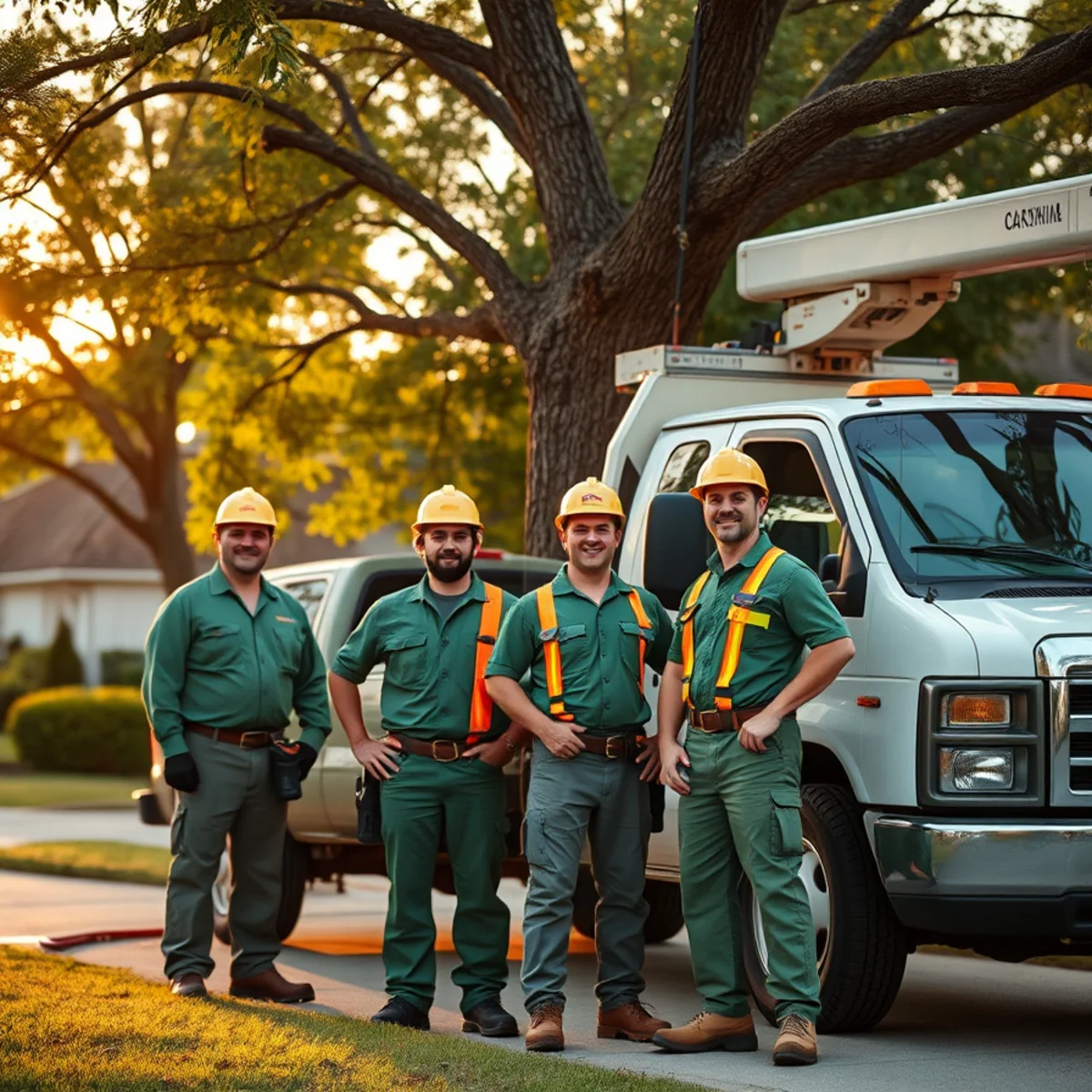
If you are weighing a removal in Fort Worth or anywhere across the DFW metroplex, let us take a look before you rent a saw. Sion Tree Service is locally owned, licensed and insured, and known for honest quoted-equals-final pricing and a thorough haul-away on every job. We respond fast, often same-day or next-day. Call (208) 635-2100 for a free, no-pressure estimate, and we will tell you straight whether the tree needs to come down and how we would do it safely.
Fort Worth permits and protected trees most DIYers never check
Safety is not the only thing a Saturday chainsaw plan tends to skip. Fort Worth has a real tree ordinance, and it has teeth. The city protects dozens of native species, and a tree past a certain trunk size cannot simply be dropped because it is in your way. Cutting one without approval is not a paperwork slap on the wrist here; it can turn into a per-inch fine and a mitigation bill that dwarfs what a removal would have cost in the first place.
The thresholds catch people off guard because they are written around trunk diameter measured at roughly four and a half feet up, not around how the tree looks. A few specifics worth knowing before anyone starts a cut in Tarrant County:
- A single-family lot under one acre can usually remove one dead, dying, diseased, or genuinely hazardous tree without a permit, but a healthy shade tree is a different conversation
- Larger trees that meet the city's significant or heritage size are protected and generally need city sign-off before they come down, even on your own property
- Post oak and blackjack oak hit protected status at a smaller diameter than most other species in parts of town east of I-35W, so the gnarled post oak in the back corner may be regulated when you would never guess it
- Unauthorized removal of a protected oak carries steep per-diameter-inch penalties, and removing a protected tree without replacing it can trigger a mitigation fee charged per caliper inch
- Surrounding cities run their own versions; Arlington, Keller, Southlake, and Colleyville each have ordinances and HOA overlays that do not match Fort Worth's word for word
A licensed local crew deals with this constantly and can tell you in one look whether a tree is likely protected, whether your situation fits a hazard exemption, and how to document a dead or dangerous tree the right way. Getting that call wrong is one of the more expensive mistakes a DIY removal can make, and it never shows up on a chainsaw rental receipt.
The hidden costs that erase your DIY savings
The whole appeal of doing it yourself is the money saved, so it is worth doing the actual math. The rental saw is the cheap part. The expensive part is everything the tree turns into the moment it hits the ground, and the second job hiding underground after that.
What a DIY removal really runs once you add it up:
- Saw and stump-grinder rental, plus fuel, bar oil, and a replacement chain when a buried nail or rock dulls the first one
- Safety gear you do not own, from chaps to a proper helmet with eye and hearing protection
- Hauling and dump fees, because a single mature pecan or live oak can produce a trailer or two of brush and rounds that a transfer station charges by weight to accept
- Your weekend, and a second one when the job stalls with a hung-up limb or a standing spar you cannot safely finish
- Yard repair after the fact, since dragging logs across wet Blackland clay tears up turf and ruts a lawn fast
Then there is the stump and the roots
Cutting the tree down is only half of it. A flush-cut stump in North Texas does not quietly disappear; it sits for years, sprouts suckers from species like hackberry and crepe myrtle, and becomes a home for ants and decay fungi. Grinding it out by hand-rental is heavy, awkward work, and even then the lateral roots remain. On older Fort Worth lots with clay tile or cast-iron sewer laterals, those leftover roots keep chasing moisture toward pipe joints, and the rock salt and chemical stump killers people reach for are exactly the wrong move near a septic field or sewer line. A professional removal prices the stump, the grind depth, and the haul-away into one number up front, so the job is actually finished instead of becoming three smaller projects spread across a summer.
FAQs
You can generally remove a tree on your own property, but work near power lines is regulated, and some neighborhoods or HOAs have rules on protected or large trees. The bigger issue is safety and liability: if a DIY removal damages property or injures someone, that exposure is yours. A licensed, insured company carries that risk for you.
Cost depends on factors like the tree's height and trunk size, its species, how close it is to your house or power lines, the difficulty of access, and whether you want stump grinding and haul-away included. Rather than a flat figure, we give a free on-site estimate with honest, quoted-equals-final pricing so there are no surprises.
A leaning or storm-cracked tree carries stored tension and can fail without warning, especially during DFW spring storms and high winds. Leaning trees, hung-up limbs, and trees with rot or freeze cracks are exactly the ones that are most dangerous to cut and most urgent to assess. It is best to have a professional evaluate it sooner rather than later.
Often yes, depending on the tree. A single-family lot under an acre can usually take down one dead, dying, or hazardous tree without a permit, but healthy trees that meet the city's significant or heritage size are protected and generally need approval first. Removing a protected tree without sign-off can bring per-inch penalties and mitigation fees, so it is worth confirming the rules before any cut.
A full-service crew chips the brush, cuts the trunk into manageable rounds, and hauls everything off the same day so your yard is left clean. At Sion Tree Service we also grind the stump when you want it gone and rake the work area, and we season and sell firewood, so usable wood does not simply go to waste. You are not left with a pile to dispose of or a stump to deal with later.
A ground-level stump can sit for years, send up new suckers, and attract ants and decay, while the lateral roots keep growing toward moisture. On older North Texas lots that can mean roots working into clay or cast-iron sewer laterals and septic fields, and the salt or chemical stump killers homeowners try are risky near those lines. Grinding the stump and pricing it into the removal keeps the job genuinely finished.